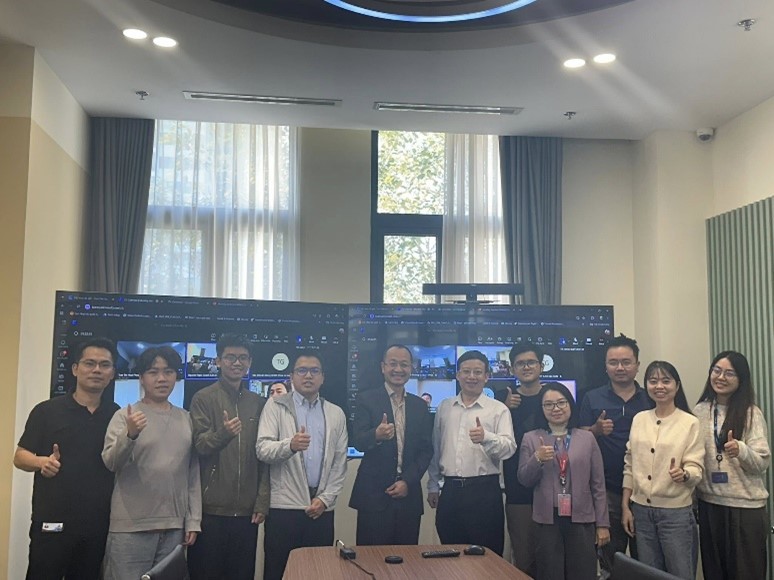
Hanoi, May 22, 2025 — The AIRPACT Vietnam 2025 Conference, themed “Smart Air – Smart Cities: Digital Solutions for Vietnam’s Future,” concluded with a powerful message: integrating data-driven, digital innovations is no longer a choice, but a necessity for urban sustainability in Vietnam. Held at VinUniversity and organized by the VinUni-Illinois Smart Health Center in collaboration with the United States Embassy in Vietnam, the conference convened a diverse spectrum of stakeholders from government, academia, and the private sector to confront Vietnam’s escalating air quality challenges.
Over two dynamic days, leading researchers, urban planners, policymakers, and entrepreneurs exchanged knowledge on how to transform Vietnamese cities into healthier, more sustainable environments using smart technologies. The conference served as a convergence point for cross-sector collaboration, highlighting the importance of interdisciplinary approaches in tackling complex environmental issues.
Keynote speeches and panel discussions focused on the role of artificial intelligence, Internet of Things (IoT), and digital twin technologies in real-time air quality monitoring, pollution forecasting, and responsive urban planning. One standout session emphasized the significance of data transparency and open platforms in fostering citizen trust and civic engagement.
Among the most anticipated segments was the showcase of digital prototypes and smart sensing systems developed through collaborative research initiatives between VinUni and international partners. These included low-cost air quality monitoring devices, machine-learning models for pollutant prediction, and mobile apps designed to raise community awareness and behavioral change.
A live demonstration of a Digital Twin Air Quality Management System illustrated how cities can simulate, predict, and adapt infrastructure planning based on pollution patterns — a leap forward for evidence-based policy design.
A dedicated track for young innovators and student researchers drew substantial attention, reinforcing AIRPACT’s commitment to empowering the next generation of environmental leaders. Projects presented by student teams from VinUni and other institutions tackled issues ranging from air filtration in schools to community-driven pollution mapping using drones.
Moreover, discussions on inclusive environmental governance highlighted the role of local communities, particularly vulnerable populations, in shaping sustainable urban futures.
Closing the conference, Associate Professor Dr. Minh Do, Director of the VinUni-Illinois Smart Health Center, emphasized that AIRPACT is not a one-time event, but a starting point for long-term collaboration: “Vietnam’s urban future depends on how boldly we embrace innovation today. We must integrate smart technologies, community voices, and cross-sector expertise into a unified response to environmental challenges.”
The U.S. Embassy reaffirmed its commitment to supporting Vietnamese initiatives in clean technology and public health through continued partnerships, funding, and knowledge exchange.
With a strong foundation laid by AIRPACT Vietnam 2025, organizers announced the establishment of an annual innovation forum focused on Smart Environment – Smart Governance, to track progress, share new developments, and catalyze continuous action across Vietnam.
As cities like Hanoi, Ho Chi Minh City, and Da Nang grapple with the dual pressures of rapid urbanization and climate change, AIRPACT has illuminated a path forward — one powered by data, equity, and collaboration.